How CFO and Audit Committees Can Enhance Respective Roles

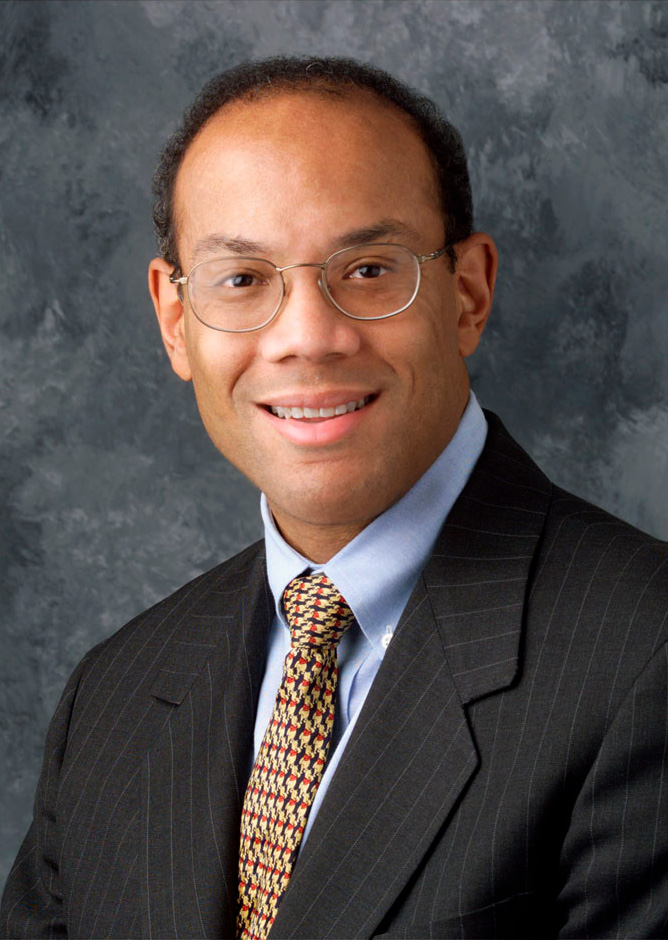
auditIn a webinar that provided significant information about the increasing responsibilities for audit committee members, KPMG’s Audit Committee Institute (ACI) and the National Association of Corporate Directors featured Carol B. Tomé in a webinar on June 23. Not only is Tomé Home Depot’s chief financial officer (CFO) but she also serves as  chairman of the audit committee in her board role at UPS. James P. Liddy, Vice Chair of Audit, KPMG moderated the webcast, which provided updates on key financial reporting/accounting developments, including FASB projects and “hot button” issues.  Asked what advice Tomé would give to CFOs she said, “Remember, it’s not a parade ground presentation—don’t spend excessive time on your slides.” It’s the engaged dialogue between the CFO and the audit committee that will really pay dividends. “Begin by thinking of the outcome you want and measure yourself against it.”  .  As for what audit committee members need to do to make the most of their interaction with the CFO, Tomé emphasized the need for interaction prior to the meeting.  Having a relationship with the CFO beyond just the board and audit committee meeting is critical. “It’s important to have that up front communication prior to the meeting,” she said.  Such conversations enable the CFO and audit committee to know what the issues are and where you should spend your time together. “Yes we have different roles but we’re all working for the shareholders.”

Get Ready for the 2012 Proxy Season Now

Attorneys Mike Melbinger and Erik Lundgren of Winston & Strawn offered a recap of the 2011 proxy season in a webinar this week.  Melbinger produces the most-read blog on compensation issuesHotTopicsProxySeason2011Banner.  While only 35 companies received failed say on pay (SOP) advisory votes to date, Melbinger insisted that this proxy season was no walk in the park.  Not only do shareholders have heightened disclosure expectations, but seven more provisions of Dodd Frank will be in effect next year and he predicts that ISS and shareholder groups will be more dogged in their pursuits going forward.  He also noted that companies made extra efforts to achieve positive votes in 2011—more companies provided executive summaries in the CD&A and linked pay for performance. Many emphasized “get out the shareholder vote” including shareholder and ISS outreach.  

Tell your story was the theme of the action items that Melbinger suggested.  “Silence is not golden. Unless you affirmatively, unequivocally adopt best practices, unambiguously disclose them and beat ISS over the head with them, you run the risk that ISS and others will assume that you do not follow that best practice.”

Now is the time for boards to review what they learned from shareholders – whether at the annual meeting or proxy voting or shareholder outreach.  As for compensation,  and get rid of the problems and follow best practices now.

Rumsfeld’s Newest Rule: Continue to Transform

Former Defense Secretary Donald Rumsfeld dhrtold a capacity home-town crowd at the Four Seasons that every organization needs to continue to transform.  In his appearance for the Chicago Council of Global Affairs, Rumsfeld discussed the complex situation in Pakistan, his book “Known and Unknown” and the way a number of American and international institutions don’t fit our current information age and need transformation.

Rumsfeld calculated that he has lived through a third of our nation’s history.  As both the youngest and oldest Secretary of Defense, a White House Chief of Staff, Representative to NATO and four-term congressman from Illinois, he has been an active participant in that history. He took four years to write the book and digitized a portion of his archive and made it available on his website www.rumsfeld.com  in conjunction with the book’s publication.  Since launching in February, the site has received over 18 ½ million hits. Access to such a rich trove of information shows that “decisions are made with imperfect information.”   The bestseller has been called the first memoir of the information age.

Many U.S. and international institutions date back to the Truman years, an inflection point at the end of WWII and the beginning of the Cold War.  NATO, the UN, DoD, CIA and so many other organizations date back to those days.  “We’ve been changing and the world has been changing. And we need to be comfortable that the rest of the world is not like us.” 

Rumsfeld’s message was that all organizations need to continue to transform.  He’s led by example, making handwritten and typewritten memos and papers from his long government service available for everyone to draw their own conclusions.

Silence Can Create a Lack of Confidence; Communication Reduces Risk, Can Even Save Share Price

amosSMAFLAC Chairman and CEO Daniel Amos has long endorsed transparency. AFLAC was one of the pioneers in offering a non-binding Say on Pay (SOP) vote voluntarily in the spring of 2008, prior to the financial crisis and Dodd-Frank.

In his recent comments at a financial industry conference in New York he conveyed what his company has learned in practice. “What did we do wrong,” was their initial reaction when AFLAC investors asked for the SOP prior to the new regulations.  Directors and management “came to the shared belief that investors should have the right to know how the compensation packages at a company are calculated.”

In his view, lack of transparency has an impact on stock price because it creates uncertainty for investors. Companies should view Say on Pay votes as part of an ongoing effort to be more transparent with investors. AFLAC’s conclusion is that open communication with investors and analysts is better for long-term growth.

How CEOs and Boards Can Ensure Constructive Tension

header_board_of_directorsIn an NACD webinar, Ken Daly, president of NACD, Kenneth Duberstein, lead director of the Boeing Company, director of  Conoco-Phillips and The Travelers  Companies and Stuart R. Levine, director of Broadridge Financial Solutions and lead director of J. D’addario & Company addressed the thorny issue of trust between the CEO and the board.

Using his example of his work as CEO of NACD, Daly demonstrated how important it is for CEOs to invite candid dialogue from the board. “Trust is built over time and developed through actions, not words. The way to develop trust is for the board and management to recognize that they are on the same team, that communication is straight-forward, two-way and “straight from the horse’s mouth.”  It’s also important to telegraph emerging issues.  Duberstein noted that management and boards are on the same team but have different roles—management is charged with execution and the board need to actively participate in strategy decisions and provide oversight for all shareholders by monitoring performance and asking the right questions.

Properly managing executive sessions and giving good feedback to the CEO was discussed. Levine, a best-selling business author, noted that the CEO of Broadridge has a practice of calling each board member prior to the meeting to get a sense of the board’s issues and concerns. “That way, we’re already engaged before the meeting.”

What the discussion among these leaders with broad experience emphasized was how important both boards and CEOs have to do to “get it right.”  The webinar provided valuable insight.

Board Oversight of Risk Requires Candor

RiskOversight“Collegiality can be the enemy of good board governance,” said Christine A. Poon during a NACD Chicago Chapter seminar on Global Boards and International Risk Management. She is Dean and John W. Berry Chair in the Max M. Fisher College of Business at The Ohio State University and board member of Prudential Financial and Philips Electronics in the Netherlands. She was formerly Vice Chairman of Johnson & Johnson.

Boards need to get the information they need and engage in rigorous discussion when it comes to oversight of a company’s risk management and growth.  “There’s no need to be disrespectful, but it is critical that directors get the answers they need to understand the issues.” 

Fellow panelist Lisa A. Payne concurred.  “You have to train management to eliminate the mind-numbing presentations that go out in the board books and tell them that management should come to the board with a handful of overheads so that we can use our time together to get to the heart of the matter.”  She is Vice Chairman and Chief Financial Officer of Taubman Centers, Inc. and a director of Masco Corporation and Taubman and a trustee of the Munder Funds.

Executive session is a key tool for the board.  “We often begin with an executive session,” said Payne. “It enables us to focus on the key issues through the duration of the meeting.  We often meet again in executive session after the formal meeting.”

Circumventing the Whistle-Blower Incentive

whistleblowerAt the NACD’s Director Professionalism training in Houston this week, a group of seasoned directors were discussing the pending Securities and Exchange Commission’s rules for the whistle-blower incentives that would circumvent the company’s own internal reporting processes.

The discussion centered on the role of the board in encouraging employees to use the internal system to report any concerns.

“We do employee surveys at our company,” said Roberta S. Brown, a director at several regulated energy companies. “The HR Committee asked to see all the written comments that accompanied the surveys,” she said as a way to better understand employee issues and concerns.  “And we learned that employees were impressed to hear we read them.”

The board’s action sent a message to employees that their opinions were valued and concretely conveyed that the board was concerned about employee sentiment on all issues.  In that way, the board encouraged the use of the internal mechanism to report concerns.  It also conveyed the importance of “tone at the top” in terms of the board’s commitment to hear the employees’ perspective on issues.

It's the 'Dumb Questions' that Can Save the Company

auditorsWayne Shaw encourages directors to ask “dumb questions” when it comes to reviewing the financials of any company.  The Helmut Sohmen Distinguished Professor of Corporate Governance at Southern Methodist University notes that it is sometimes the question that wasn’t asked that gives directors insight into assessing the integrity of the firm’s financials.

His presentation was part of the NACD Director Professionalism training in Houston May 4-6.

Rather than getting caught up in the minutia, directors should ask management, “Are we on track to meet our financial goals and if not, what is the company doing about it?” He encourages directors to ask the CFO if he/she is comfortable with the financial demands of the CEO.  “Is there pressure to make the numbers?”

Directors should ask internal auditors if they have any concerns with accounting or reporting issues. In following up with the external auditors, directors should ask how the company differs from others in the industry? What weaknesses did they find?  How aggressive is the company’s accouting policies relative to the competition? And, is management responsive to the issues they raise?

Shaw cited chapter and verse of well known companies whose directors didn’t ask the basic questions.

Asking some obvious questions would have saved millions of dollars of shareholders’ investment and sometimes the company itself.

It’s the ‘Dumb Questions’ that Can Save the Company

auditorsWayne Shaw encourages directors to ask “dumb questions” when it comes to reviewing the financials of any company.  The Helmut Sohmen Distinguished Professor of Corporate Governance at Southern Methodist University notes that it is sometimes the question that wasn’t asked that gives directors insight into assessing the integrity of the firm’s financials.

His presentation was part of the NACD Director Professionalism training in Houston May 4-6.

Rather than getting caught up in the minutia, directors should ask management, “Are we on track to meet our financial goals and if not, what is the company doing about it?” He encourages directors to ask the CFO if he/she is comfortable with the financial demands of the CEO.  “Is there pressure to make the numbers?”

Directors should ask internal auditors if they have any concerns with accounting or reporting issues. In following up with the external auditors, directors should ask how the company differs from others in the industry? What weaknesses did they find?  How aggressive is the company’s accouting policies relative to the competition? And, is management responsive to the issues they raise?

Shaw cited chapter and verse of well known companies whose directors didn’t ask the basic questions.

Asking some obvious questions would have saved millions of dollars of shareholders’ investment and sometimes the company itself.

The “Publicness” of Public Companies

publicnessThose who work in corporate communications and public affairs have long held that companies must operate in the larger public interest.  Now, Hillary Sale, a law professor at Washington University has coined a new term, “publicness” as she examines the Model Business Corporation Act and describes a set of responsibilities that U.S. companies need to better handle.

Communication professionals have pointed to Arthur W. Page, a PR executive for AT&T from 1927 to 1946 who developed a set of principles about how a company should operate including “a successful corporation must shape its character in concert with the nation’s. It must operate in the public interest, manage for the long run and make customer satisfaction its primary goal.”

Professor Sale has used the law to describe how officers and directors of companies should act. She attributes the creeping regulation as a result of “the failure of officers and directors to govern in a sufficiently public manner has resulted not only in scandals, but also in more public scrutiny of their decisions, powers and duties.” The government and the media, she says, is driven by the public, and now “have increasing influence over corporations, which requires a change in the way officers and directors understand and do their job.”

CEOs and corporate directors would do well to read her excellent article in the Duke University journal, “Law and Contemporary Problems.”

The bell has already been rung. The government and a larger public are involved in corporate governance and their concerns need to be addressed.