Even Lawyers Are Telling Directors, It's Time to Communicate

proxyaccessDuring a NACD Webinar, DC in the Boardroom:  A Board Level Briefing on Proxy Access, the three attorney panelists—David Caplan a partner at Davis Polk & Wardell, John Gorman, partner at Luse Gorman and former Special Counsel, SEC Division of Corporation Finance and Annette L. Nazareth, also a partner at Davis, Polk & Wardell and  former SEC Commissioner, all agreed that directors should enhance their communication with shareholders.  They also agreed that the time to act is now.

During this period leading up to the proxy season, directors should be engaging in some form of self-evaluation to understand what their vulnerabilities are—do shareholders have concerns about executive compensation, the capabilities of the current board of directors or other governance issues? 

Nazareth reminded the participants that “investor protections has been a focus of the SEC and one way of ensuring protection is good corporate governance.”  

Directors should “consider ways to enhance shareholder communication so that you’re not in the position of your 3% shareholders feeling that they need to nominate their own directors because they are not being represented appropriately by the current board.”

Directors, Do You have a Shareholder Engagement Program?

Directors, Do You have a Shareholder Engagement Program? With the passage of the Dodd-Frank Wall Street Reform and Consumer Protection Act, power has shifted to shareholders.  The 2011 proxy season is a game-changer as the rules require boards to seek shareholder support for compensation programs and even directorship candidates.

Directors, do you have a shareholder engagement program? Have you reviewed and assessed the board capacity for shareholder communication and dialogue?  Have you discussed how you will handle increased dialogue and interaction with shareholders?

The board world has changed.  Shareholders have greater power to influence board composition and executive pay based on the provisions of Dodd-Frank for proxy access, say on pay, limits on broker discretionary voting.

By remaining silent, boards increase the power of proxy advisors as the only independent guidance to shareholders on how to vote.  Boards increasingly need to engage with key shareholders, initiating communication and dialogue.

Get started now.

Opportunity for the HP Board

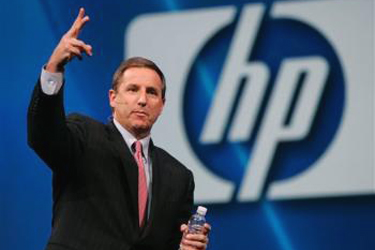
Mark HurdAfter ousting HP CEO Mark Hurd for his indiscretion with a marketing contractor, falsifying expenses to conceal his relationship, and thereby failing to live up to the HP code of conduct, the Hewlett-Packard board has a chance to demonstrate to shareholders and the public that they intend to revive and enforce “tone at the top” of the storied Silicon Valley company.

Hurd and his predecessor, Carly Fiorina, who was also fired by the board, brought new meaning to the HP Way.  Certainly, it was a different company than when brilliant engineers and founders William Hewlett and David Packard were at work in the company. Their instinctive style of “managing by walking around” would be almost impossible to replicate. Fiorina, ambitious and eager to make her mark aggressively drove the Compaq merger while a subplot revealed that the HP board had its own problems as chairwoman Patricia Dunn stepped down facing felony charges. After the scandal, Hurd’s success was welcomed even if he took a cost-cutting and execution style approach to management.

With Hurd occupying both the Chairman and CEO role, Robert Ryan has served as lead director since 2008.  But it has been Mark Andreessen handling the Hurd resignation.  As the founder of another storied company, Andreessen has the gravitas to insist on a leader that not only performs well but behaves well.

Andreessen is given to greater transparency as well as sensitivity to culture and a larger group of stakeholders including investors, employees and the larger public given that he is an under-40 wildly successful entrepreneur now leading a company that provides a platform for social networking websites.

Andreessen is the spark that HP needs at this time, setting the tone and communicating what the board is doing on behalf of shareholders and stakeholders.

Dodd-Frank Reflects ‘New Normal’–“Boards Are the Problem”

Dodd-Frank Reflects 'New Normal'--"Boards Are the Problem"“We’re seeing a sea-change in the environment of shareholder empowerment,” said Holly Gregory, Weil Gotshal partner and governance expert. “The Dodd-Frank bill accelerates a fundamental change, a new normal in the balance of governance power. “ She went on to note that the eighth anniversary of Sarbanes Oxley, enacted during the aftermath of WorldCom and Enron debacles,  boards were seen as the solution to the failures in corporate accountability. “In sharp contrast the new legislation reflects the view that boards are the problem and shareholders must be empowered to hold boards accountable.”

Gregory made these remarks on a National Association of Corporate Directors and Weil Gotshal webinar attended by hundreds of directors on Friday as boards try to gain a better understanding of the requirements that the new legislation that President Barack Obama signed into law on July 21, 2010.

“I want to emphasize that the theme within the legislation is that boards are the problem,” said Gregory.

Boards are well advised to recognize that the implementation of the legislation will fundamentally change their interactions with shareholders.  For directors who have eschewed any contact with shareholders, they must engage with shareholders in meaningful ways to elicit their support.  The sooner and more intelligently that they begin this dialogue, the better for them.

Dodd-Frank Reflects ‘New Normal’–"Boards Are the Problem"

Dodd-Frank Reflects 'New Normal'--"Boards Are the Problem"“We’re seeing a sea-change in the environment of shareholder empowerment,” said Holly Gregory, Weil Gotshal partner and governance expert. “The Dodd-Frank bill accelerates a fundamental change, a new normal in the balance of governance power. “ She went on to note that the eighth anniversary of Sarbanes Oxley, enacted during the aftermath of WorldCom and Enron debacles,  boards were seen as the solution to the failures in corporate accountability. “In sharp contrast the new legislation reflects the view that boards are the problem and shareholders must be empowered to hold boards accountable.”

Gregory made these remarks on a National Association of Corporate Directors and Weil Gotshal webinar attended by hundreds of directors on Friday as boards try to gain a better understanding of the requirements that the new legislation that President Barack Obama signed into law on July 21, 2010.

“I want to emphasize that the theme within the legislation is that boards are the problem,” said Gregory.

Boards are well advised to recognize that the implementation of the legislation will fundamentally change their interactions with shareholders.  For directors who have eschewed any contact with shareholders, they must engage with shareholders in meaningful ways to elicit their support.  The sooner and more intelligently that they begin this dialogue, the better for them.

Does “Corporate Democracy” Mean Dysfunction?

With the passage of the Dodd-Frank Wall Street Reform and Consumer Protection Act, board service organizations are conducting Webinars to help directors understand the changes.  The director moderating a recent session noted that it was difficult for shareholders to nominate their own directors, but said it was unclear to him why it was a problem and why Congress had done anything to to authorize the SEC to change the rules. democracy

board of directors“I’d hate to think that the U.S. corporate world will become as dysfunctional as the U.S. Senate,” he said, referring to “this monstrosity ” of legislation.  His questions to his fellow panel members reflected his belief that new regulations were going to stifle performance.  “This is meant to encourage dialogue with shareholders, which is an important principle of the legislation,” the panelist replied.

It turns out the moderating director has  the  educational and legal experience that boards seek.  But he’s 70 years old.  He has served on his current board since 1977.  The other director who joined the board with him is 86 and a third director, who is 83, joined the board in 1959.  There are younger board members–74, 62, 52 and 46.  But clearly, this is a board that needs to renew itself.

The world has changed.  Board work has changed.  It requires recognition of the important role that shareholders play in governance.  The director may be an esteemed professional but he has missed the last ten years of shareholder activism, brought about because boards turned a deaf ear to shareholders.

Does "Corporate Democracy" Mean Dysfunction?

With the passage of the Dodd-Frank Wall Street Reform and Consumer Protection Act, board service organizations are conducting Webinars to help directors understand the changes.  The director moderating a recent session noted that it was difficult for shareholders to nominate their own directors, but said it was unclear to him why it was a problem and why Congress had done anything to to authorize the SEC to change the rules.

Corporate Democracy“I’d hate to think that the U.S. corporate world will become as dysfunctional as the U.S. Senate,” he said, referring to “this monstrosity ” of legislation.  His questions to his fellow panel members reflected his belief that new regulations were going to stifle performance.  “This is meant to encourage dialogue with shareholders, which is an important principle of the legislation,” the panelist replied.


It turns out the moderating director has  the  educational and legal experience that boards seek.  But he’s 70 years old.  He has served on his current board since 1977.  The other director who joined the board with him is 86 and a third director, who is 83, joined the board in 1959.  There are younger board members–74, 62, 52 and 46.  But clearly, this is a board that needs to renew itself.

The world has changed.  Board work has changed.  It requires recognition of the important role that shareholders play in governance.  The director may be an esteemed professional but he has missed the last ten years of shareholder activism, brought about because boards turned a deaf ear to shareholders.

What Directors Can Learn from BP Crisis

What Directors Can Learn from BP CrisisIn his article in today’s AgendaWeek, Stuart Levine makes a compelling case for directors to pay more attention to strategic communication and their understanding of reputational risk with the BP crisis as an example.

“Enterprise risk management is not limited to crisis situations.  Establishing governance best practices to anticipate threats is a critical part of the challenges facing boards,” he writes. And further, “To fulfill fiduciary responsibilities, questions and preparation both strengthen a company’s ability to respond to unforeseen events.”

Levine, a veteran board member and author of such best-selling business books as “Cut to the Chase” notes the need for board-level conversations and processes that review performance, risk and ethics.

Memo to Crisis Managers–Forget Control; Think Engagement

Memo to Crisis Managers--Forget Control; Think EngagementThe drama unfolding in the Gulf should send a strong message that the old playbook is inadequate for the social 24/7 always-on media.

What’s still important:  having a crisis plan. It can be as simple as a flow chart:  How will you marshal your resources? Do you have a crisis webpage ready to go live when the crisis hits? Do you have well-defined process, a central point of contact for responding and making decisions?

Begin by developing a set of principles.  Live by them.  Then, listen, engage and move forward with transparency.

While you want to be flexible about engaging and solving the problem, a number of key elements should already be in place:  Do you have contacts lined up at the key stakeholders and influencer groups expected to be impacted in your crisis scenarios? And more important, do you have relationships with these stakeholders so that you can reach out to them early in the crisis to get input and help? Do you have internal contacts to proactively manage those relationships? Has your company/organization moved to a stance of engaging with key audiences early in resolving a crisis instead of facing off under old-school confrontational approach?

Scenario planning is invaluable.  One of the best guides remains “Shell Global Scenarios to 2025:  The future business environment: trends, trade-offs and choices.”

Ask for help.  Form new alliances.  Let your customers, employees, suppliers and community members tell you what’s important.

You won’t do everything right, but if you move forward guided by principles, you will be regarded as a decent member of the community.

What BP’s Tony Hayward Needs to Do to Get It Right

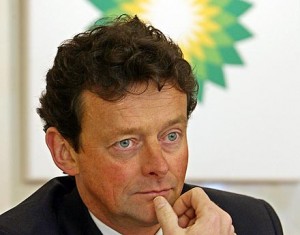
tony_hayward_440As BP’s Tony Hayward has learned, a crisis is a terrible thing to manage.

Even with the containment cap placed over the ruptured oil well a mile deep in the gulf, the live camera feed of the spewing oil creates a disturbing visual representing the ineptitude of BP and Tony Hayward himself.  Earnest Hayward, promising to “make it right,” has become fodder for late night comedy.

Beyond stopping the leak from the well, what does Tony Hayward need to do to save BP’s reputation and his own?

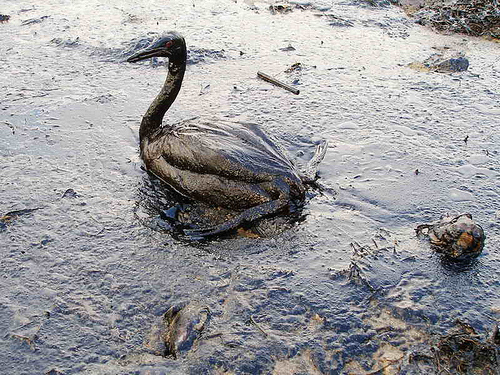
The gruesome images from the Gulf Shores, combined with the nearly incomprehensible size and scale of the disaster, only magnifies the extreme lack of control faced by BP in managing this PR nightmare.

Hayward’s biggest fault is not seeing the explosion and gushing well deep below the ocean’s surface as an epic, global crisis. If Hayward had chosen to move beyond the legalese offered by counsel and his network of advisors, was there anything he could have done or said that would improve his standing with the public? Did he have any good choices?

BP has been innovative in asking the public to help solve the problem, a laudable effort largely unrecognized. BP has received more than 20,000 ideas on how to stop the flow of oil or contain the oil spill. However, the promise to clean up every drop of oil and “restore the shoreline to its original state” appears as futile as the booms bobbing on the Gulf barely containing the oil. As globs of oil foul the wetlands and the beaches, the company’s commitment to meeting all of its responsibilities seems impossible to achieve.

The other media star of this drama, President Barack Obama sought first to maintain distance between BP’s gusher and his presidency.  Reading the downward drift of the polls on his own leadership, he paraded his concern on Larry King Live, in a third visit to Louisiana, and in political briefings and radio addresses. Obama also promoted new regulations and ordered an investigation into BP’s behavior.

What can each man have done differently—and do differently going forward—to gain credibility and respect? What positive developments can come out of the BP oil spill?

  1. Hayward and Obama need to forge a new business/government relationship that stops the name-calling and blame-laying—and instead conveys to a concerned public their shared dedication to solve the problem. On their own, they are each appealing for votes or applause or vindication, which the public finds insulting.
  2. They must create a way for the public to participate in the solution. What programs can be put in place to engage the public in volunteerism related to the crisis? This type of work is cathartic for individuals who are grieving the loss of pristine coastlines and shorebirds. What’s more, images of volunteer crews would supply positive, inspirational images to replace the current onslaught of disturbing images.
  3. Obama must appoint an unassailable environmental leader—such as Bill Ruckelshaus—to  develop energy policy that is green and business neutral. This individual must find innovative ways to invite participation and dialogue.
  4. Invite the nations of the world to join together to create an environmental prize, based on solving or making progress in solving the world’s greatest environmental problem—an environmental Nobel.
  5. Create a new meaning for the British and U.S. relationship for the Fourth of July. Tony Hayward and BP should develop a unique participatory event for Americans on July 4th. Think big.