Memo to Crisis Managers–Forget Control; Think Engagement

Memo to Crisis Managers--Forget Control; Think EngagementThe drama unfolding in the Gulf should send a strong message that the old playbook is inadequate for the social 24/7 always-on media.

What’s still important:  having a crisis plan. It can be as simple as a flow chart:  How will you marshal your resources? Do you have a crisis webpage ready to go live when the crisis hits? Do you have well-defined process, a central point of contact for responding and making decisions?

Begin by developing a set of principles.  Live by them.  Then, listen, engage and move forward with transparency.

While you want to be flexible about engaging and solving the problem, a number of key elements should already be in place:  Do you have contacts lined up at the key stakeholders and influencer groups expected to be impacted in your crisis scenarios? And more important, do you have relationships with these stakeholders so that you can reach out to them early in the crisis to get input and help? Do you have internal contacts to proactively manage those relationships? Has your company/organization moved to a stance of engaging with key audiences early in resolving a crisis instead of facing off under old-school confrontational approach?

Scenario planning is invaluable.  One of the best guides remains “Shell Global Scenarios to 2025:  The future business environment: trends, trade-offs and choices.”

Ask for help.  Form new alliances.  Let your customers, employees, suppliers and community members tell you what’s important.

You won’t do everything right, but if you move forward guided by principles, you will be regarded as a decent member of the community.

What BP’s Tony Hayward Needs to Do to Get It Right

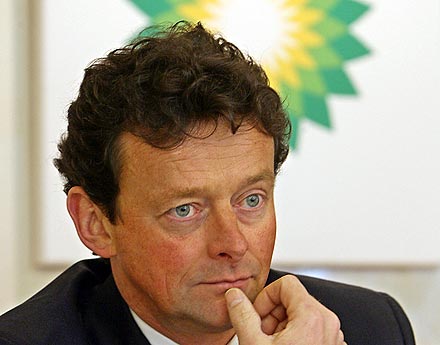
What BP's Tony Hayward Needs to Do to Get It RightAs BP’s Tony Hayward has learned, a crisis is a terrible thing to manage.

Even with the containment cap placed over the ruptured oil well a mile deep in the gulf, the live camera feed of the spewing oil creates a disturbing visual representing the ineptitude of BP and Tony Hayward himself.  Earnest Hayward, promising to “make it right,” has become fodder for late night comedy.

Beyond stopping the leak from the well, what does Tony Hayward need to do to save BP’s reputation and his own?

The gruesome images from the Gulf Shores, combined with the nearly incomprehensible size and scale of the disaster, only magnifies the extreme lack of control faced by BP in managing this PR nightmare.

Hayward’s biggest fault is not seeing the explosion and gushing well deep below the ocean’s surface as an epic, global crisis. If Hayward had chosen to move beyond the legalese offered by counsel and his network of advisors, was there anything he could have done or said that would improve his standing with the public? Did he have any good choices?

BP has been innovative in asking the public to help solve the problem, a laudable effort largely unrecognized. BP has received more than 20,000 ideas on how to stop the flow of oil or contain the oil spill. However, the promise to clean up every drop of oil and “restore the shoreline to its original state” appears as futile as the booms bobbing on the Gulf barely containing the oil. As globs of oil foul the wetlands and the beaches, the company’s commitment to meeting all of its responsibilities seems impossible to achieve.

The other media star of this drama, President Barack Obama sought first to maintain distance between BP’s gusher and his presidency.  Reading the downward drift of the polls on his own leadership, he paraded his concern on Larry King Live, in a third visit to Louisiana, and in political briefings and radio addresses. Obama also promoted new regulations and ordered an investigation into BP’s behavior.

What can each man have done differently—and do differently going forward—to gain credibility and respect? What positive developments can come out of the BP oil spill?

  1. Hayward and Obama need to forge a new business/government relationship that stops the name-calling and blame-laying—and instead conveys to a concerned public their shared dedication to solve the problem. On their own, they are each appealing for votes or applause or vindication, which the public finds insulting.
  2. They must create a way for the public to participate in the solution. What programs can be put in place to engage the public in volunteerism related to the crisis? This type of work is cathartic for individuals who are grieving the loss of pristine coastlines and shorebirds. What’s more, images of volunteer crews would supply positive, inspirational images to replace the current onslaught of disturbing images.
  3. Obama must appoint an unassailable environmental leader—such as Bill Ruckelshaus—to  develop energy policy that is green and business neutral. This individual must find innovative ways to invite participation and dialogue.
  4. Invite the nations of the world to join together to create an environmental prize, based on solving or making progress in solving the world’s greatest environmental problem—an environmental Nobel.
  5. Create a new meaning for the British and U.S. relationship for the Fourth of July. Tony Hayward and BP should develop a unique participatory event for Americans on July 4th. Think big.

What BP’s Tony Hayward Needs to Do to Get It Right

tony_hayward_440As BP’s Tony Hayward has learned, a crisis is a terrible thing to manage.

Even with the containment cap placed over the ruptured oil well a mile deep in the gulf, the live camera feed of the spewing oil creates a disturbing visual representing the ineptitude of BP and Tony Hayward himself.  Earnest Hayward, promising to “make it right,” has become fodder for late night comedy.

Beyond stopping the leak from the well, what does Tony Hayward need to do to save BP’s reputation and his own?

The gruesome images from the Gulf Shores, combined with the nearly incomprehensible size and scale of the disaster, only magnifies the extreme lack of control faced by BP in managing this PR nightmare.

Hayward’s biggest fault is not seeing the explosion and gushing well deep below the ocean’s surface as an epic, global crisis. If Hayward had chosen to move beyond the legalese offered by counsel and his network of advisors, was there anything he could have done or said that would improve his standing with the public? Did he have any good choices?

BP has been innovative in asking the public to help solve the problem, a laudable effort largely unrecognized. BP has received more than 20,000 ideas on how to stop the flow of oil or contain the oil spill. However, the promise to clean up every drop of oil and “restore the shoreline to its original state” appears as futile as the booms bobbing on the Gulf barely containing the oil. As globs of oil foul the wetlands and the beaches, the company’s commitment to meeting all of its responsibilities seems impossible to achieve.

The other media star of this drama, President Barack Obama sought first to maintain distance between BP’s gusher and his presidency.  Reading the downward drift of the polls on his own leadership, he paraded his concern on Larry King Live, in a third visit to Louisiana, and in political briefings and radio addresses. Obama also promoted new regulations and ordered an investigation into BP’s behavior.

What can each man have done differently—and do differently going forward—to gain credibility and respect? What positive developments can come out of the BP oil spill?

  1. Hayward and Obama need to forge a new business/government relationship that stops the name-calling and blame-laying—and instead conveys to a concerned public their shared dedication to solve the problem. On their own, they are each appealing for votes or applause or vindication, which the public finds insulting.
  2. They must create a way for the public to participate in the solution. What programs can be put in place to engage the public in volunteerism related to the crisis? This type of work is cathartic for individuals who are grieving the loss of pristine coastlines and shorebirds. What’s more, images of volunteer crews would supply positive, inspirational images to replace the current onslaught of disturbing images.
  3. Obama must appoint an unassailable environmental leader—such as Bill Ruckelshaus—to  develop energy policy that is green and business neutral. This individual must find innovative ways to invite participation and dialogue.
  4. Invite the nations of the world to join together to create an environmental prize, based on solving or making progress in solving the world’s greatest environmental problem—an environmental Nobel.
  5. Create a new meaning for the British and U.S. relationship for the Fourth of July. Tony Hayward and BP should develop a unique participatory event for Americans on July 4th. Think big.